
UNTAMED TODAY · ARTIST FEATURE

Jesse James Ferrell wrote his mother's whole interior life into sixteen songs — while she is still here to hear them
Conversation With Mom (Listening Through Time)
The Woman Who Kept Coming Back
There is a kind of love that waits until the house is quiet to tell the truth. Jesse James Ferrell's new record is sixteen songs of it — a son who took his mother's
letters, calls, and dreams and turned them into music, asking to know her all the way through before the window closes. He let us sit with him while the last of the light came through the curtains.

HE DOES NOT arrive like a man with an album to sell. He arrives like a man who has just set something heavy down. We are talking about a record that is already out — sixteen tracks of acoustic soul-folk, French-raspy backing vocals low as memory, a heartbeat of love under everything — and the first thing he wants to be clear about is that it is not, in the way the word is usually meant, about him. He does not sing a note of it. He is the writer — the one who receives the songs and shapes them — and the voices you hear are the music he built around his mother's truth.
“Every line is my mother talking,” he says, “except when I am answering her back, which happens in a handful of the songs. These came out of our actual life — letters, emails, texts, phone calls, the conversations we have shared. Some came from visions and dreams she told me. She shares, and I create the lyric and the music. A few are me responding, or telling her what I think. I am the one holding the pen, but she is the one in the room.” It is an unusual posture for an artist whose catalogue runs loud and queer and euphoric — circuit-house anthems built for sweat and strobe. This is the opposite gear. Close-mic, unhurried, organic. A lamp instead of a spotlight. When you ask why he went so quiet, he answers as if it were obvious.
“She is not asking to be admired. She is asking to be witnessed. There is a difference, and most of us spend a lifetime confusing the two.”
That sentence is the whole record. The opening track, “While There Is Still Time,” is a woman at the table after supper asking to be known — not the shining parts, the dark she traveled through. He calls it the door. “The life is not behind her and it is not ahead of her. It is here, at this table, in whatever breath is left. So the first thing you hear is her asking to be known like the time is here now — because it is.” Anyone who follows his work hears the Codex underneath it: live like the life is here now, Article Twenty-Seven, written into a mother's voice.
The album did not begin as an album. It began as a trip. He and his mother were planning a month together in Mexico — she would come down from Texas — and he asked her what her heart most wanted from the time. “Her answer, and my answer back to her, cracked the whole thing open,” he says. “That is how my music arrives. I receive it like downloads — ideas, rememberings, feelings, stories from my past surfacing all at once — and from there a whole album builds itself. One honest exchange about a trip, and suddenly there were sixteen songs standing in the room.”
THE BOX, THE KERCHIEF, THE WORDS
He is the kind of writer who refuses the tidy version, and he proves it three songs in. “Box of Old Journals” opens the literal box she mentions in the first song — letters, visions, scraps of who she was before she learned to hush — and what is inside is not a redemption arc. It is a girl the song says she still cannot save.
“I will not pretend that touching old pain always heals it,” he says. “Sometimes you open the box and the loneliness rises up like it never left. So the song lands on the only honest line I had: knowing is the medicine, even if healing never fully comes through.”
This is where the album earns the right to be called embodied rather than therapeutic. He does not narrate her wounds; he stages her scenes. “Cub Scout Kerchief” is the day girlhood got assigned to a child who had been running free with the boys — told to put on the fabric, told what she now was, and quietly holding onto a borrowed blue kerchief like a stripe of freedom. He never editorializes the child. “A child does not experience identity as a statement,” he says. “She experiences a kerchief that felt like freedom and a grown-up who took it away. My job was to refuse to explain her.”
Its companion, “Before I Had Words for It,” is the adult looking back with a lantern, and it carries the album's hardest truth. It names, plainly and without flinching, the childhood sexual abuse his mother endured at the hands of an extended family member — abuse that went on for years, beginning before she had any language for what was happening to her. He is careful, here, about a subject that runs underneath his entire mission — survival, the staying-alive that the loud records carry in code. The song states the truth and stops; it never films it. “You tell the truth without turning the truth into spectacle,” he says, and then, before the conversation can drift toward disclaimer, he steers it back into the song: “The most faithful thing I can do is make the person visible instead of the pain vivid. That is the whole discipline.”
THE FIRE THAT WAS NEVER PUNISHMENT
The center of the record is its strangest song. “The Buckets and the Fire” is a recurring dream his mother carried for years — not chairlifts but metal buckets on a rail, two by two, riding slowly through a red-gold dark toward heat. A cousin, her father, a stranger each appear beside her and meet the fire differently: one in terror, one in denial, one almost at peace. He gave it the longest runtime and the most ancestral arrangement on the album, frame drum and wordless chant, and then he gave it a theology that refuses to punish.
“The pain is not the end of meaning. It is the breaking of the seal.”
“The fire is not hell,” he says. “Maybe it is revelation — maybe it burns off the names and leaves what is true. That is hers, not mine. I just gave it a frame drum.” It is the clearest example of his persona on this record — the Awakened Artist who is also a strategist: he knows exactly why the most cosmic song gets the most restrained vocal. “The second you belt it, it becomes a performance about the afterlife and stops being a woman telling you the strangest thing she carries. I kept the voice human in the middle of the cosmic.”
THE BODY AS PROOF, NOT APOLOGY

If the record has a place where it stops being only gentle, it is “This Body Is My Proof.” Here the tenderness sharpens into refusal. An aging woman looks at the bright little commands the world keeps sending — stay young, get repaired, disappear correctly — and declines. The arrangement gives her the widest emotional range on the album: angelic in places, then a bold shadowed intensity at the refusals. Its origin is almost unbearably ordinary. “It came from a blunt, hurt email my mother sent me,” he says, “about memes I kept sending her that were landing as wounds I never intended. That email was the beginning of me actually facing her aging — facing that one day she would no longer be here in physical form, only in my heart and in the people her book has touched. I love this song. It holds so much about what it is to watch a parent grow old.”
“This body is not my apology. This body is my proof.”
This is the album's richest AND Tension — a woman who is wounded AND unbowed, soft AND furious, at peace AND still angry about what was asked of her. “Every other song earns its peace through tenderness,” he says. “This one earns it through refusal. She is allowed to be angry about what was asked of her body. Six children pulled her open. A nervous system that learned early that safety was not hers. She gets to name all of it and still call it proof.” The line he most wants heard is the instruction buried in the bridge — do not correct my peace. “That is spoken to the person who will inherit her things and her story. The first act of your honor is to not improve me. Peace is not the same as quitting. Peace is loving what got torn.”
WHAT HE WITHHELD
Then the record does something brave: it turns the light on its writer. After “Before My First Words” — a radiant exhale, the first song aimed fully at his mother as the woman who spoke worth over him before he had language — comes “What I Withheld,” the hardest song on the album to have written. It is the one where the son takes responsibility for the years he spent behind a wall.
The truth at its center is his own coming out. At twenty-seven, just after his daughter Makayla was born, he told his mother and his then-wife the same thing at the same time: that he is gay. He had asked his mother to hold it. She did not — she told his siblings before he was ready — and the trust that broke in that moment took decades to repair. After it, the song admits, it was no longer safe to be that open, so he withheld, called the distance self-protection, and let it run for years. “I did not want a song that blamed her and stopped,” he says. “I wanted the harder one, where I own my half of the silence.” The bridge is the floor of the entire record — the terror not of death in the abstract but of a specific phone that will one day go unanswered.
“I realized too late how much of home has always just sounded like her voice.”
It ends with the only repair available: he hands the story back. Take this from me now, it still belongs to you. “That is what you do while there is still someone to give it to,” he says, and for the first time in the conversation he lets a silence sit.
THE BLESSING SHE HAD ALREADY GIVEN
What rescues the record from grief is not a trick of sequencing — it is a revelation he says he did not fully understand until he wrote it. “Complete at Eighty” arrives like the sun finally through the curtains after the whole album has sat through weather, and he is unusually precise about why the warmth is honest. “I do not believe pain is a gift,” he says. “I believe meaning is something a person makes, sometimes out of pain. The road was not kind. She made the meaning anyway. Those are different claims and I guard the difference.”
“The forgiveness was given before it was asked.”

The two songs that follow open the record all the way out. “The Prayer She Prayed for Me” reveals that his mother — who walked with the old ones, who carried Mayan hush and ancestral smoke — had never been praying for a different son. She was praying for the love that was meant for him, and for the man who would one day walk beside him. “The thing I was so afraid to be was already blessed before I ever confessed it,” he says. That is the album's deepest AND Tension — a mother both fiercely protective AND completely accepting, devotional AND unshockable.
It pays off in “Bless the Union,” the one song where the backing voices stop being ghostlike and become a community. It is one of several songs drawn from dreams and visions his mother shared around the time he and Mike were married. Two men on a shore, two bloodlines — Yucatán and the old world — bread and wine and salt, ancestors and friends all saying the same thing: child, you still belong. He lives near that water now, in Mexico, with Mike, the husband the song is written for. “For fifteen songs the female voice is memory, low in the mix, lifting a line and disappearing,” he says. “Here it becomes a crowd, because this is the public version of the private blessing. Some things you do not sing alone.” The breakdown answers the withholding directly: no more hiding, no more breaking for the comfort of the crowd.
THE LIVING EULOGY
He could have ended on the wedding. Instead the record closes on “She Kept Coming Back,” a living eulogy — the whole life gathered into one telling while she can still hear it played. Six lives through her body, the son she buried too young, the dreams she read, the stories she read in people's feet, the drum she used to call the old ones nearer, the little camper and the KOA lights, moving more times than the years could count. It is the song he has played the most. “I wanted people to see her through my eyes,” he says. “This beautiful soul who kept showing up and coming back through everything life handed her — far more than any one song could hold. It barely covers it.”

“I did not want a deathbed song,” he says. “I wanted one that says: here is who you are, and I am saying it out loud while you are still here. The first song asked while there is still time. The last song is what you do with the time.” The bridge is the only place the album looks past the present — a woman walking softly toward the treeline, drumbeat in her bones, disappearing into a mystical fog inside the forest, back to the Mother Earth who has always held her. “That is the truest picture I have of how my mother would want to leave this world,” he says. “Not a hospital. A forest. For a woman who spent her life with the ancestors and the earth, that is not a sad ending. That is a homecoming.”
“You tell her she kept coming back with a lantern in her soul — and you let her hear it.”
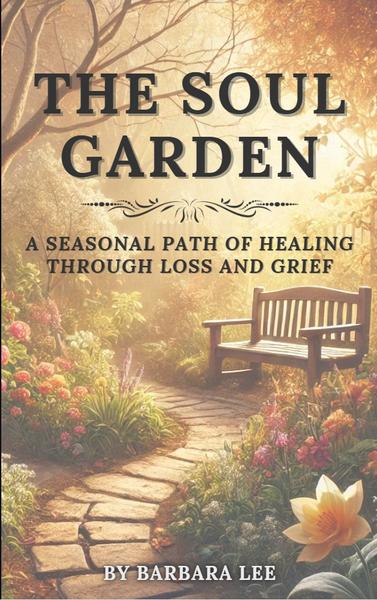
FROM THE SAME HANDS A Walk Through the Soul Garden The songs are not the only place she left herself. Her book — part memoir, part garden of grief and mercy — walks the same ground the album sings. Read the life beneath the lyrics. |
This is the present-tense aliveness the brand prizes — the thing that is true now that was not true two years ago. As with every record in his catalogue, he writes from true stories — his own and, here, his mother's — receiving them and turning them into lyric and music rather than performing them himself. He has made loud records that saved people in code. This one says the quiet part to the one person he most needs to hear it, before he loses the chance. Ask him who the album is for and he does not reach for the kid against the wall this time. He reaches closer to home.
“It is for anyone who still has the phone call they are afraid they'll lose,” he says. “Anyone whose mother is becoming a person they never fully knew, with a closing window to know her. Go sit at the table after supper. Ask for the box of journals. Listen to the part that did not heal. Tell them who they are while they can still hear it.” He pauses, and the strategist gives way to the son. “You do not have as much time as you think. That is not despair. It is the most loving urgency I know.”
Conversation With Mom (Listening Through Time) is out now on all platforms.
Begin with “While There Is Still Time.” Then call your mother.
READ THE LIFE BENEATH THE ALBUM A Walk Through the Soul Garden Her memoir — the garden of grief, mercy, and survival the songs were drawn from. The companion to Conversation With Mom. Order on Draft2Digital: [ ORDER LINK ] |
An Untamed Today self-feature · Editor-at-Large Jesse James Ferrell
Soul Frequency Records · Out now on all platforms
UNTAMED TODAY · AWAKENED ARTIST

Comments